Author: Gustavo

Theo Jones
Architectural Designer
Taxonomy
A physical soapbox from digital forms.
Speakers’ corners are known as historic places of free speech. Contemporary debates have created conflicts between traditional orators and online commenters, and physical spaces are sometimes given, then taken away by local authorities. The Perch considers the crossover of physical space and digital forums for voicing arguments or opinions.
Findings from this research speak to reduced usage of physical corners with some abandoned or dormant. Conversely, online forums are growing while battling new restrictions enabled by platforms such as Facebook, YouTube and Twitter. The COVID-19 UK lockdown has drawn sharp focus on the possibilities and limitations of online forums, while simultaneously igniting physical protests on restricted freedoms by fringe groups gathering at corners. Through the creation of a portable, adaptable, distributed and physical prototype soapbox, this work suggests a way to bridge the gaps between digital and physical sites. It argues that orators should embrace a blurring of online and in-person speaking, creating successful post-digital speakers’ corners.
The internet by nature is distributed and digital citizens are inevitably not centralised. Open-source architecture is an existing paradigm which considers citizens as part of the design process and existing projects such as WikiHouse share blueprints for distributed architectures. The Perch is a physical installation to bring speakers’ corners, open-source and digital platforms together. The research highlights the issues of exclusion, diversity, tension and occasional violence when physical debate bleeds into online comments and back into the physical. The Perch is a soapbox, originating from digital files, shared and manufactured through small workshops or bedrooms coalescing to elevate a speaker. Sharing the construction of this perch aims to bring online speakers together in physical space. As a traditional soapbox, the speaker is elevated, however, unlike a traditional soapbox, The Perch is adaptable. With a stool-like design of three legs and flat top, it’s easily assembled and transported. Each leg is adaptable to allow terrains of different heights, slopes and surface material.


Emma Crewe
Research Professor
SOAS University of London
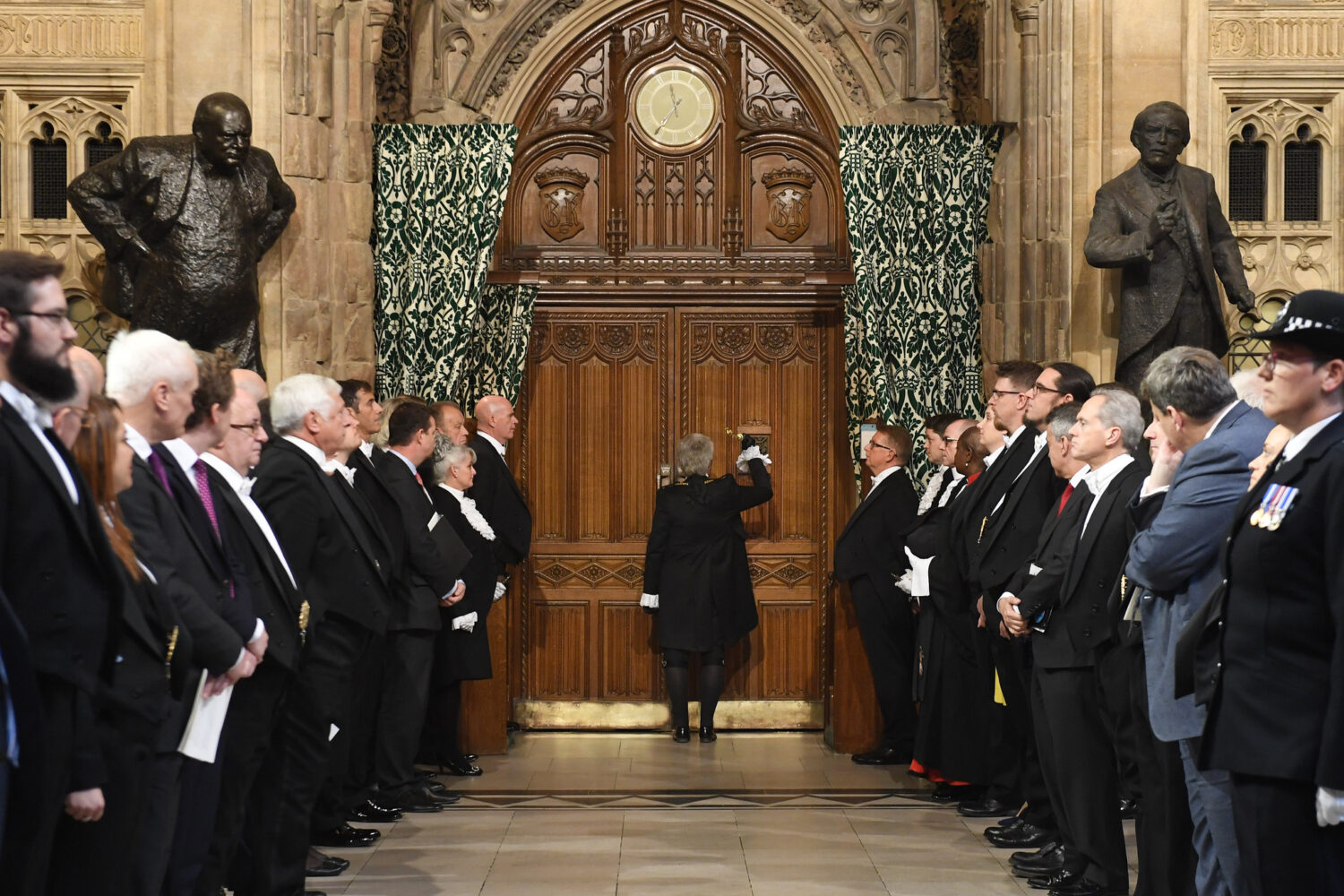
Scholars of parliament often classify MPs’ work as roles and measure their activities, votes and outputs, missing the contradictory, dynamic and relational aspects of politics. Building on ethnographic studies of space in parliaments, I offer a systematic way to research MPs’ work by looking at the rhythms of performance through time and space, the riffs of meaning and how these are both organised by rituals and symbols both in parliament and outside. Critical of my own former bias towards both mind, knowledge and temporal perspectives, in my recent book on the Anthropology of Parliaments (forthcoming), I bring bodies, emotion and space into the centre of my analysis. Under the influence of Lefebvre (2013) and Mead (1934), in this paper I will draw out more of the implications of embodied spatial processes for the study of parliaments.
This methodological approach enables a study of the differences between MPs but also the patterns of interaction in the various buildings, spaces and sites in both parliaments and constituencies. To provide an example of how this works, I will elaborate this approach to understanding space in relation to my own ethnographic research on the House of Lords (2005) and House of Commons (2015). Politicians’ minds and bodies have to navigate time (parliamentary calendar and seasons) and space (a parliamentary estate often with many outbuildings, government departments and the streets of their constituencies) by following repetitive routines and timetables but also improvising new ones. These rhythms create continuity and disruption in the work of MPs and peers. Groups of MPs share rhythms in common – mostly planned (e.g., attending a Select Committee), and others spontaneous (like sitting regularly with your allies in the tea room), while many rhythms are idiosyncratic (e.g., visiting particular businesses in their constituency annually). In their everyday work, rhythms provide continuity in social relations and form, which makes it possible for MPs to navigate their changeable social world and shapeshift between audiences. It means they can develop and maintain key social relationships and have some continuous sense of self in relation to the world around them. While the space of the Commons is like a frenetic city, with many outbuildings and a high turnover of politicians at each election, the House of Lords is more like a gilded village. Peers’ membership is for life and they occupy a far more restricted space. Their use of space both creates but also reveals a completely different culture and politics.
This approach to understanding political work, considering how minds and bodies are entangled in time and space, is not only generative for understanding MPs and peers. We all engage in politics – at work and play – and we all need rhythms, riffs and rituals to navigate our entangled social and political worlds. But politicians do politics with the dial turned up because they walk with even more friends and foes, and engage in more bitter power struggles, than the rest of us. The dial indicates intensity – of emotion, pleasure, pain, cultural significance, political impact… – meaning that what politicians do as they navigate space tends to be a magnified version of the politics enaged in by ordinary people.
Jonathan Chibois
Post-doctoral Researcher
Institut interdisciplinaire d’anthropologie du contemporain (IIAC)
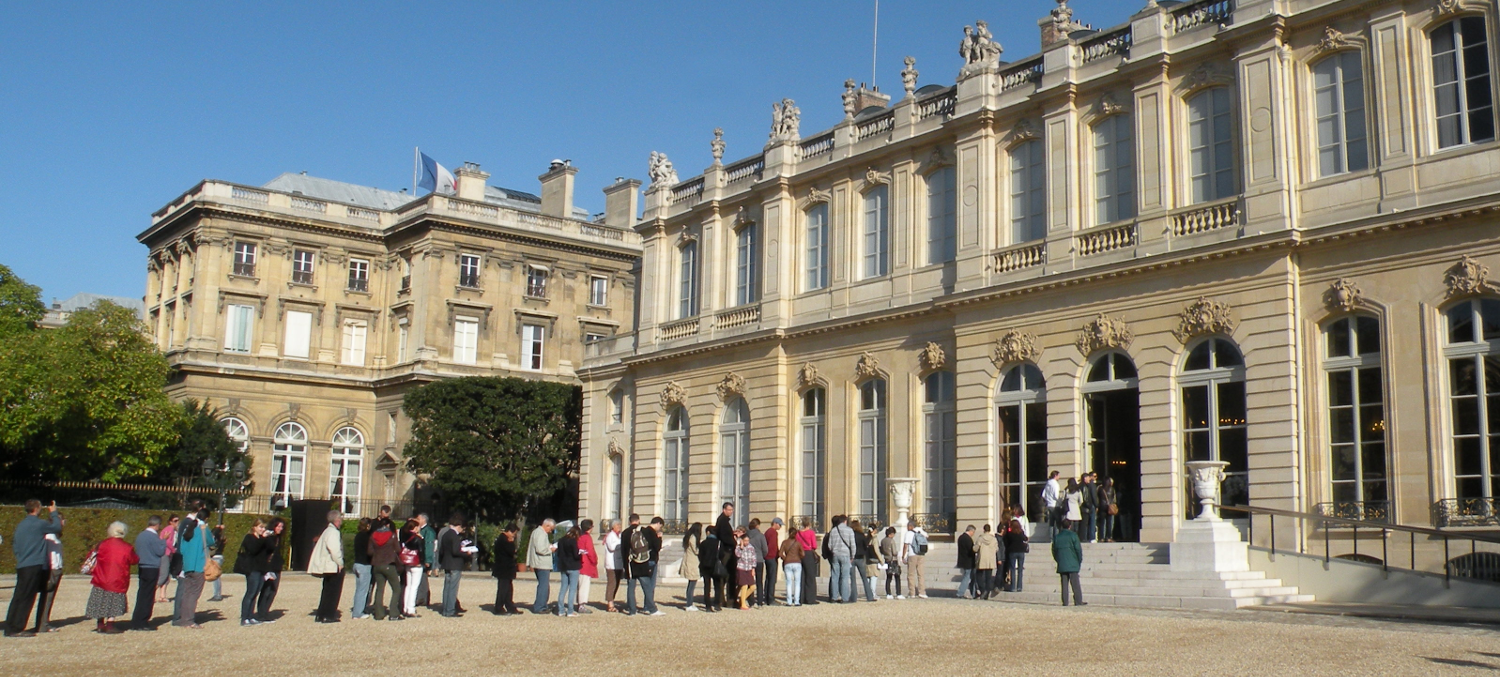
This contribution focuses on the way in which the French National Assembly takes advantage of the buildings in which it sits −the Palais Bourbon− to give material existence to the ideal of popular sovereignty. My objective is to show how (according to what logic, what purpose and with what means) the parliamentary institution dynamically distributes the occupation of this place among its various users and regulates its uses. In this perspective, I am not only interested in the hemicycle and the historic heart of the Palais Bourbon, i.e. its most visible and symbolic heritage. On the contrary, my aim is to look at the overall way in which the institution inhabits this place, giving an important place to the analysis of its periphery, its margins and its backstage areas.
My analysis is based on a long-term ethnographic survey conducted between 2007 and 2017 as part of a doctoral thesis in anthropology on parliamentary infrastructure. This work led to the close observation of two phenomena. The first concerns the evolution of the movement of people policy in the Palais Bourbon with the gradual development of digital access control technologies. The second concerns the concomitant implementation of a cultural policy of guided tours based on the discovery of the Palais Bourbon’s real estate heritage, aimed exclusively at French citizens. My contribution is a synthesis of these two case studies.
My contribution will be organized in three parts. My starting point is the great reversal, at the end of the 1990s, of the policy of welcoming the public within the territory of the National Assembly. Since the French Revolution, in fact, citizens’ access to the Palais Bourbon has been constantly restricted both to protect the members of the Assembly and in the name of the privilege of the election. Twenty-five years ago, the rise in anti-parliamentary rhetoric forced the institution to review its position and to consider an extended welcoming policy, in order to show openness and give French citizens a full place in this symbolic place. Whereas the Palais Bourbon was a space reserved for MPs, it then became the “House of the citizens”.
First, I will explain what an important challenge this greater openness to the public has posed to the Assembly. There was no question of abandoning the protection of Members’ working conditions and privileges. The administration of the institution was therefore faced with two contradictory demands: on the one hand, the demand that Members should be at home in the Palais Bourbon, that is to say, away from the solicitations and protests of the citizens; and on the other hand, the demand of the Presidency of the Assembly to welcome the citizens to the Palais as widely as possible.
Secondly, I will present how the Assembly has resolved this challenge. In order to do so, it has made extensive use of the possibilities offered by digital access control technologies, and in particular by the widespread introduction of the principle of access badges. This has made it possible to develop a strategy of “flow separation”, which consists in making certain areas of the Palais accessible to certain types of badges only. Moreover, this strategy has made it possible to differentiate the use of the interior space of the Palais in terms of time, depending on specific moments of the day, week or year.
Thirdly, I will highlight the implications of this new welcoming policy of the public and its concrete implementation. In order to resolve the contradictory injunction presented above, the Assembly had indeed to strictly define the perimeter of each category of users of the Palais Bourbon (MPs, journalists, citizens, etc.), their rights of access to the different places and their conditions of mutual interaction. This gave rise to a hierarchy of statuses, made explicit by the badges, at the top of which are the deputies and at the bottom of which are the citizens.
In the end, I will show that the Assembly today inhabits the Palais Bourbon in a way that affirms and promotes a particular vision of national representation, with distant historical roots. This new policy of welcoming the public reinforces the public’s position as spectators of parliamentary work and that of the members of parliament as the only legitimate actors in the debates. In the Assembly, this is the first result of my doctoral thesis, change is incessant but paradoxically it is always put at the service of the continuity of the established order.
Philip Norton (Lord Norton of Louth)
Professor of Government
University of Hull
Configuration of space in legislatures matters not only for the transaction of formal business, but also for the extent to which it enables members to mix informally with one another, free from formal constraints and observation and direction by party leaders.
Studies of the use of space in legislatures tend to focus on dedicated space for formal gatherings – the chamber and committee rooms – where proceedings are rule-based, observable and measurable. What is less studied is what is essentially unseen behaviour: members gathering informally in the dining and tea rooms, corridors, lobbies and lounges. Such informal contact is not rule-based, formally observable or measurable. It can, however, have significant consequences.
The use of informal space serves to facilitate socialisation – getting to know the norms of behaviour as well as fellow members. This can be significant for female members, especially in parliamentary systems with male-orientated adversarial politics to the fore in formal space, especially the chamber. Its use facilitates information exchange, members sharing their views and information gleaned from other sources and offering opportunities for party whips and leaders to get an idea of attitudes among party members, attitudes that may not be expressed publicly. It is used for lobbying, members with a particular cause seeing other members to press their argument and garner support prior to utilising formal space to make their case publicly; the lobbying may not only be backbench member to backbench member, but backbench member to minister and vice versa. In the UK House of Commons, voting in division lobbies ensures ministers (including the Prime Minister) are physically present to vote and, once in the voting lobbies, can be approached by other members to argue their causes. Ministers and those wishing to be ministers may also utilise informal space to mobilise political support, being seen and listening to other members, establishing one’s credentials as a potential candidate for promotion or, if already in office, keeping supporters in place. Neglect of informal space – failing to be seen and to mix with fellow members – can harm or even destroy a political career. Neglecting to use informal space to build support when their leadership was under challenge was viewed as contributing to the loss of the UK Conservative Party leadership by both Edward Heath and Margaret Thatcher.
The importance of informal space is highlighted when it ceases to be available or is constricted. The coronavirus crisis of 2020 forced legislators to decant, wholly or in large measure, the legislature and to operate as discrete entities away from the building. Although formal business may be transacted by virtual means, with some assemblies able to hold virtual plenary sessions, and with committees operating online, it has proved less feasible to replicate the space for members to mix informally. Although members may use social media, creating WhatsApp groups and texting one another, there is not the same capacity to meet someone unexpectedly ands strike up a conversation. What may be termed the serendipity of informal contact is lost.
The constricted or non-existent ability for members to mix informally has significant political consequences. Limiting informal contact between members, and hence the exchange of information, strengthens the executive. Sharing information among members via social media may prevent the executive being a monopoly supplier of information, but the process of sharing takes time and is likely to be reactive. For the executive, limited opportunities for members to meet informally are beneficial in that they reduce the likelihood of spontaneous plotting and rebellions.
This paper examines why the use of space for members to mix informally in legislatures matters and why, without such an analysis, it is not possible to understand fully the behaviour and impact of members of parliaments. There is more to a parliament than what happens in the chamber and committee rooms.
Christian Rosen
Teacher and Researcher at the Institute for Sociology
Technical University of Darmstadt
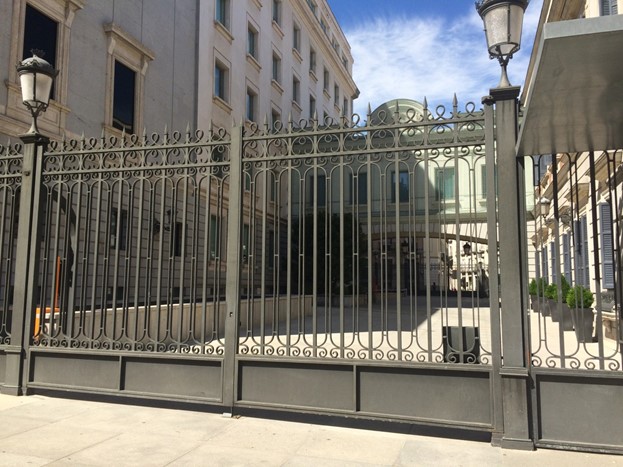
This contribution examines the social production of places of political practice in the parliament buildings of Berlin and Madrid and beyond. It is based on the assumption that space is first produced in its meanings for actors through social interactions, and in a second step can also have an effect on their practice. Based on Bourdieu’s theory of political fields and the central concepts of habitus, capital and field, parliamentarians and other field participants were accompanied and questioned during longer periods of field observation. The aim was to find out how they use places in their political practice and what field-relevant meanings they simultaneously assign to these places.
For the political practice of actors in national political fields, the parliament represents the most important and central place of their activities in the capitals and thus influences their everyday working life to a high degree. The focus of this contribution is on parliaments as socially constructed places and their significance for the actions of field participants in national political fields. First of all, the question is asked:
What forms of social production of places in and around the parliament by the actors can be observed?
While other works focus on the parliamentary hall, this contribution deals with places such as the office, exclusive clubs and public spaces in and around the parliament and their significance. It can be shown how the actors provide places themselves with meanings for the national political field, but also how institutionalised meanings can influence the actions of actors in specific places.
The second question to which this contribution is devoted is:
What significance does the parliament have for the places of political practice in the capitals and their material form and arrangement?
Parliaments are central places in the everyday life of the actors. However, they are not the only places of importance for political practice. Where other places are located in relation to the parliament and how they are arranged plays an important role in their use by the actors. Offices of members of parliament, event rooms of lobbyists and the seats of the large media houses are examples of these places. Their distance from the parliament, their size, equipment or architecture are described by the actors as aspects of practical relevance. Other contributions have already conceptualised capitals as planned urban developments or architectural plans. This contribution examines in particular the parliament in the context of its urban environment and on the basis of the practice of relevant actors from the national political field. It thus enables a new view focused on its users, the national political fields.
This contribution builds on the findings of ethnographic field research in the European capitals Berlin and Madrid. A total of 45 actors were interviewed and some of them were accompanied in their everyday professional practice for a longer period of time.
Alexandra Meakin
Research Associate
University of Manchester
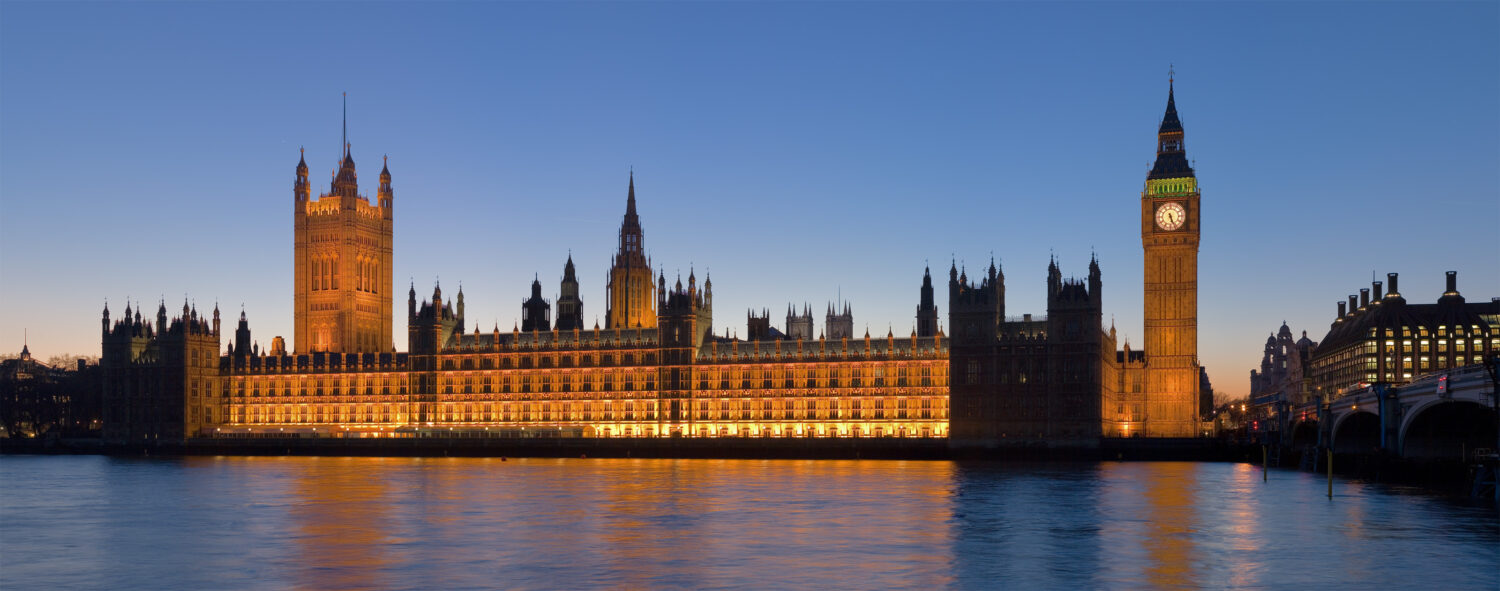
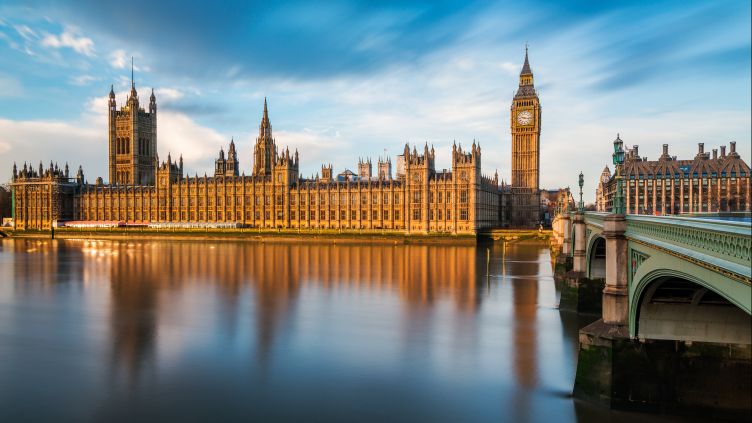
Legislative buildings are not simply collections of bricks and mortar, but shape and influence the behaviour of those working within. One such building, the Palace of Westminster—the permanent home of the House of Commons and House of Lords since 1547 has become so intrinsically linked with the institution of parliament that the idea of moving out of the Palace—now dangerously dilapidated—is not even considered as an option. The building is considered to have “cast a spell” over MPs in particularand thispaper examines the nature and impact of this spell. It demonstrates how anemotional attachment has shaped decisions about the Palace for centuries—and is shaping the policy response to the building’s failing infrastructure and crumbling stonework. Indoing so, it adds to the small but significant literature on the meaning and impact of parliamentary buildings. It further offers policy-relevant insights to the Restoration and Renewal programme, demonstrating considerable real-world impact. By understanding the attachment of key actors within the UK Parliament to the building in which we work, we can understand how the style and format of the building has been maintained through centuries and how, in turn, the building has shaped the style and format of UK politics.
Alexandra Anderson
Q-Step Post-doctoral Researcher
Sheffield Methods Institute
Matthew Flinders
Professor of Politics
University of Sheffield
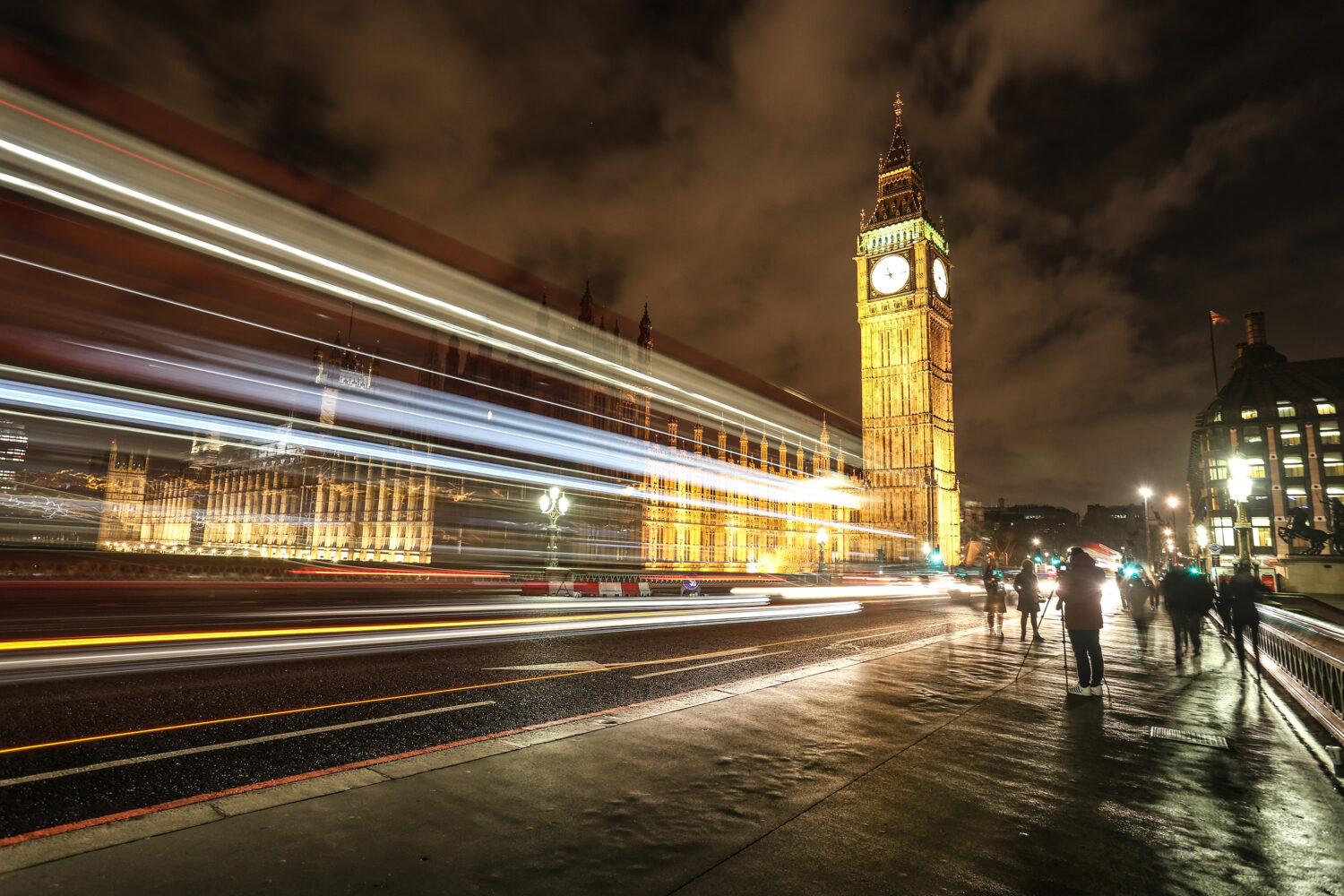
The UK’s Palace of Westminster, a Grade I listed building and part of UNESCO world heritage site, is currently falling apart and is in dire need of repair. As one of the UK’s most iconic and significant buildings, the palace’s oldest parts date from the 11th Century and the majority of the building was rebuilt after a fire in 1834. The building has seen limited maintenance since then and now there is a significant risk of fire, the masonry is crumbling, asbestos is widespread throughout the building, and dated windows and roof tiles are in desperate need of replacing.
In order to address these issues, the Parliamentary Buildings (Restoration and Renewal) Act received royal assent in October 2019. Refurbishment of the Palace has been, for the majority, designed to address only the crisis of the building – but how can the refurbishment address the broader crisis of UK democracy? This paper seeks to explore and develop the concept of the architectural imagination as it relates to both ‘politics as theory’ and ‘politics as practice’ in the refurbishment of the Palace of Westminster.
By fusing the arguments of C. Wright Mills regarding ‘the promise’ and ‘the trap’, as articulated in his classic work The Sociological Imagination of 1959, with the theories and insights provided by architects and designers about the link between physical structures and the architecture of power, this paper seeks to examine the opaque governance decisions of the R&R programme. We will explore the role of buildings in terms of reflecting social relationships and the manner in which the democratising promise of architecture might on occasion become trapped by the refusal and resistance of embedded elites to countenance change. This, in turn, opens-up a discussion regarding anchorage and fluidity, nostalgia and emotions and most of all the structural shadow of the past upon the future. For example, it cannot be ignored that the palace was rebuilt in a period in which the architecture was designed to reflect a very specific political culture. As Joni Lovenduski stated in her classic book, Feminising Politics (2002):
“For a long time Westminster was one of those places where men gathered with other men. Its ways were the ways of the gentlemen’s clubs and public schools that were so important in establishing the norms of appropriate male behaviour.’ (p. 208)
In the reluctance to have an open discussion about the role of architectural structure and its effect on the future of UK democracy, this paper seeks to explore how the architectural imagination is limited and stifled due to a constrictive mandate that aims to preserve the past, rather than focus on the future. In this sense, the architecture imagination that is embodied by the ‘renewal’ aspect of the programme, is limited due to the strict focus on the ‘restoration’. This issue can be seen especially in contrast to the recent open call for design proposals for the EU parliamentary refurbishment, and possible rebuilt, that was launched on 26 May 2020. This paper thus aims to analyse the basic challenge of ‘creating afresh’ that is itself given tangible structure and meaning through an analysis of the history and governance of the proposed ‘Restoration and Renewal Programme for the Palace of Westminster’.
Alex Prior
Honorary Research Fellow
University of East Anglia
‘Our human world speaks to us, most massively, in its buildings’. John Updike
Engaging with the UK Parliament has traditionally been a complex process, exacerbated by the lack of a single, coherent institutional identity. Identities (in communicating and establishing familiarity with an audience) are a common consideration for organisations and institutions which place a value on public engagement. However, concepts of identity and ‘brand’ have traditionally been neglected, if not explicitly opposed, in Parliament. Moreover, attempts by the citizenry to engage with the UK Parliament have been hindered by a lack of means (and often inclination) within the institution to accommodate or realise them. In the last two decades there has been a notable expansion of Parliament’s engagement efforts; however, effective engagement necessitates relevance and relatability, i.e. citizens ‘link[ing] parliamentary activity to their own lives and experiences’. Thus, understanding the relationship between engagement and identity – i.e. the nature of the institution that citizens can relate to – is vital.
The UK Parliament’s institutional identity encompasses many conflicting responsibilities. These include the commitment of Parliament (via its staff and members) to historical significance and ongoing relevance , simultaneously reflecting an ancient monument and a functioning workplace. The indistinct – or, more accurately, pluralised – ‘meaning’ of Parliament is a key factor in the elusiveness of a holistic and coherent model of engagement and institutional identity. The concept of symbolic representation is therefore significant in providing a framework for examining Parliament’s subjective ‘meaning(s)’ – to those who experience it directly and indirectly – as part of its ongoing representative functions.
The Parliamentary Estate encapsulates an abundance of symbolism across time and space, from the Commons Chamber to the Education Centre and Portcullis House. Recent debates surrounding Restoration and Renewal – a programme of extensive repairs and renovations for the Palace of Westminster – have yielded diverse conceptualisations of Parliament as a physical presence and a discursive construction. Parliament’s symbolic role is discussed in this paper through this physical/discursive dynamic. The theoretical framework focuses on symbolic representation and on the role of the legislature as a public space; a site of contested (and therefore simultaneously entrenched and malleable) narratives and symbolic ‘cues’.
This study of parliamentary symbolism in public space utilised focus groups (including citizens and parliamentary staff) and elite interviews, drawing out participants’ own definitions, conceptualisations, and narratives of Parliament. In doing so, this paper marks an important departure from typical research on the degree of parliamentary engagement, which is often focused on quantifiers such as visitor numbers to Westminster, and even gift shop sales, rather than more qualitative studies of Parliament as a physical experience of, and engagement with, Parliament’s institutional identity. As such, it will contribute to a much-needed understanding of the hitherto under-researched relationship between the institution’s physical presence and the perceptions dominating prevailing narratives of Parliament.
Sarah Childs
Professor of Politics & Gender
Royal Holloway, University of London
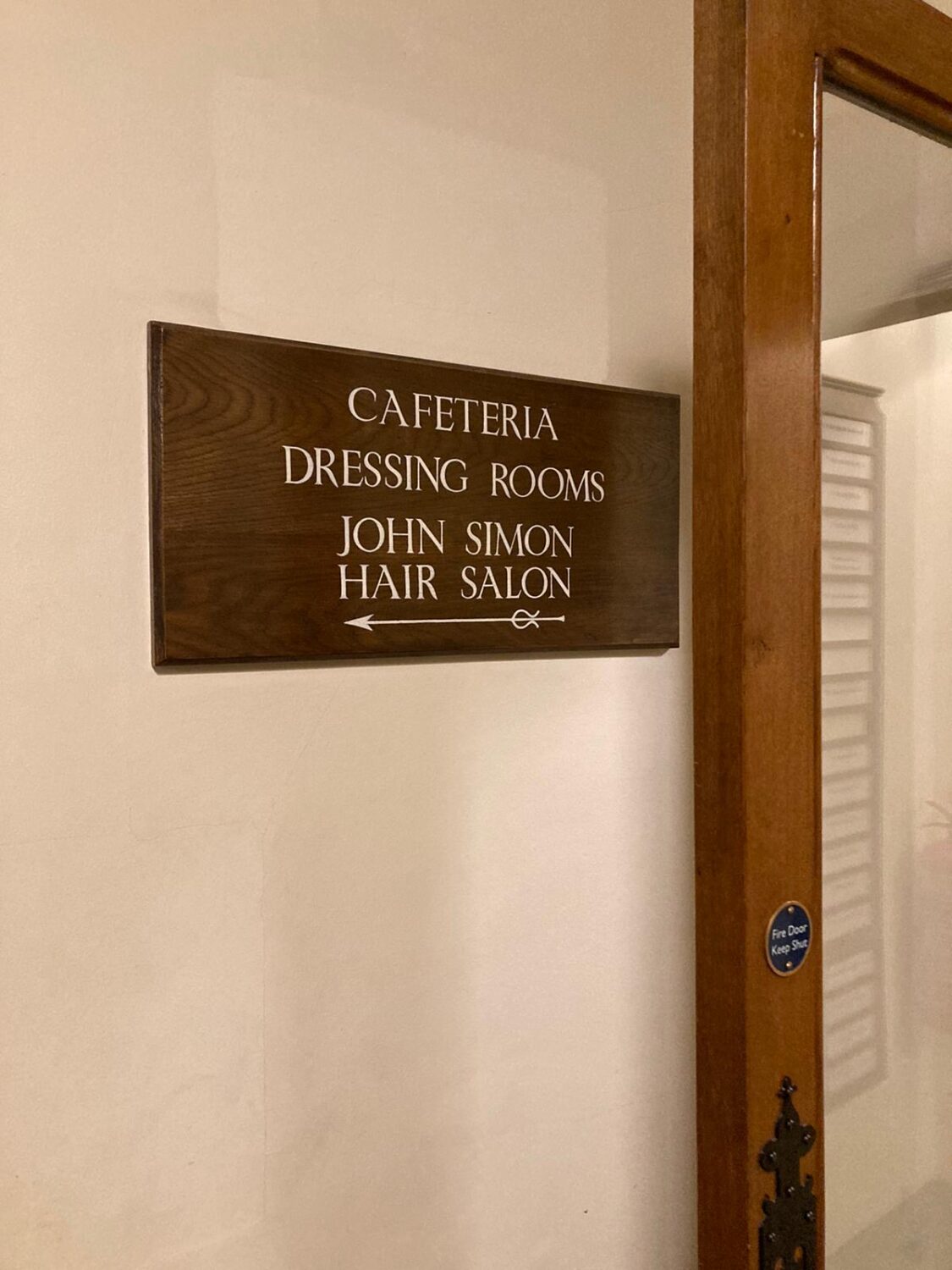
At a presentation of my The Good Parliament Report to undergraduate UK Parliamentary Studies students at the University of Manchester in 2017, I was robustly asked by a female student why, under Recommendation 38 and alongside a defence of ‘Lady Members rooms’, had I stated that ‘the House should ensure that the hairdressing salon is maintained’. In so doing, she argued, wasn’t I reinforcing the sexist standard that judges women for what they look like, over what they say and do? Wasn’t I – who was supposed to be challenging and breaking down unfair gendered expectations of women MPs – calling for the very provision of parliamentary facilities that reproduce gender hierarchies? Had the student read onto – and read into – the next sentence, she might have been more critical still: ‘In the absence of a reform of parliamentary hours, the provision of additional facilities on the estate might also be considered’. Hidden behind what was a purposefully opaque statement, was my sympathy for the provision of a nailbar and dry-cleaning service in addition to the hairdressers.
The Good Parliament (TGP) Report was never going to be a fantasy feminist report. It was always designed to be implementable, with recommendations that were realizable in the medium term. A shopping bag of 43, unranked recommendations were handed over to the Speaker, and the Commons Reference Group on Representation and Inclusion that he established and which I advised. Amongst and underpinning TGP’s recommendations, was a reconsideration of what the woman MP – and also the mother MP – might need from her Parliament, and a reflection upon what the Westminster Estate does and might provide, not least during and post R&R (restoration and renewal). It silences speak to what was too fantastical (too political) to ask for. This paper lays bare my reasoning for TGP’s recommendations which speak to aspects of parliamentary infrastructure – of buildings and of services; it offers a justification rooted in a reading of UK parliamentary politics where women remain the ‘female-politician-pretender’ and men, the ‘male-politician-norm’, and of parliaments as Houses for men, and only belatedly for (some) women.
Henrik Schoenefeldt
Professor of Sustainability in Architectural Heritage
University of Kent
Societies since the industrial revolution have naturally been obliged to invent, institute or develop new networks of such conventions or routine more frequently than previous ones. Such networks of convention and routine are not ‘invented traditions’ since their functions, and therefore their justification, are technical rather than ideological. (p. 3)
Eric Hobsbawm, The invention of traditions (Cambridge, CUP, 2012, p. 3)
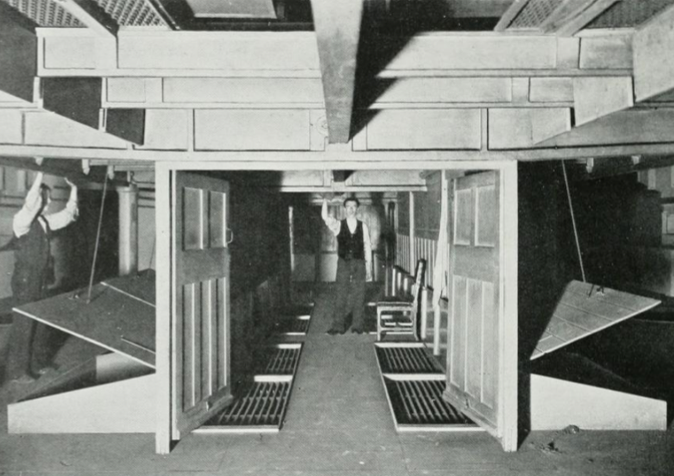
The two debating chambers of the Palace of Westminster are equipped with sophisticated technologies. In the case of the House of Commons, which was rebuilt after the war, it was an elaborate system of mechanical ventilation and air-conditioning. This superseded the 19th-century system of Charles Barry’s original debating chamber. In addition to adoption of advanced technologies, parliament established, trialed and refined a set of socio-technical practices that enabled staff, MPs and Lords to participate in the day-to-day management of the environment. It enabled them to feedback back their experiences and expectations regarding the climate and air quality in the chamber. This was facilitated through a network that was composed of users (MPs and Lords) as well as technical and non-technical staff. If viewed through the lens of actor-network-theory, staff, MPs and Lords were actors within a wider socio-technical network of environmental control.
These practices had the characteristics of what Hobsbawm describes as ‘networks of convention and routine’. These networks have been forming part of an institutional culture for over 184 years, and they evolved in response to both technological and institutional changes. Their design was also subject of formal reviews in different stages of the technological history of the chambers, leading to revisions of existing and the introduction of new practices.
The earliest frameworks were developed and trialed in the temporary Houses of Parliament between 1836 and 1851, before they were introduced into two new debating chambers of the Palace of Westminster, first in the House of Lords, which opened in 1847, and second in the House in Commons, which opened in 1852. In both chambers these practices were revisited and adapted in 1854 in response to technological alterations. In the House of Commons they were re-examined and revised in 1950 and again in the 1990s, in the House of Lords in 1966. These procedures of day-to-day engagement were complemented by larger inquiries coordinated by Select Committees. In these MPs and Lords collaborated with engineers and scientists to study and improve the environment, focusing primarily on questions of user-experience. Figure 1 is a reconstruction of the mechanisms of user engagement followed in the House of Lords between 1955 and 1966, which underpinned the development of a modern air conditioning system.
Using historic records as well as interviews with current staff, MPs and Lords, this paper provides a reconstruction of the social process and retraces their evolution over the period from 1836 to 2020. The paper is based the author’s current research within the Palace of Westminster Restoration and Renewal. It builds on the findings of studies undertaken in parliament between 2016 and 2019, which had focused primarily on the House of Commons, and on his current ongoing research into design and history of socio-technical practices inside the House of Lords. The interviews are used to render visible the design of the current social network, covering the role of both informal and formal actors, and to examine the way they integrated into the technological operations. These offers critical insights into the socio-environmental dimension of the chamber.